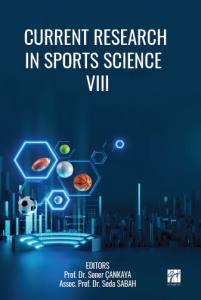
Current Research In Sports Scıence VIII
The literature in sport sciences clearly indicates that athletic performance cannot be explained solely by biomechanical efficiency, physiological capacity (e.g., VO₂max, lactate threshold, muscular strength), or tactical preparation (Baker ve Horton, 2004). Psychological resilience and the ability to regulate emotions constitute equally critical determinants of competitive success. The pressure inherent in competitive environments may give rise to what is commonly defined as “competitive anxiety,” a multidimensional construct associated with physiological and cognitive responses that can impair performance. Competitive anxiety is characterized by activation of the autonomic nervous system manifested through elevated heart rate, increased perspiration, and heightened muscular tension as well as maladaptive cognitive patterns such as persistent worry and fear of failure. This complex interplay of somatic and cognitive symptoms is widely regarded as one of the primary factors limiting an athlete’s capacity to fully express their performance potential.
-
Categories
Social and Humanities Sciences
-
Subject
Academic Books
-
Editor
Prof. Dr. Soner ÇANKAYA, Assoc. Prof. Dr. Seda SABAH
- Publishers
The transfer of the table of contents for the content is ongoing.
This book is available for the period specified under the following Digital Rights Management (DRM) Terms:
-
Permission to Print:
None
-
Cut/Copy/Paste:
None
-
Total Number of Devices That Can Be Used:
2
-
Permission to Save Book File as and Reproduce in Digital Environment:
None
Similar Books
 Current Approaches In Movement And Traınıng Scıences II
 Yeşil Büyümeye Yönelik Kamu Politikaları: Teori, Değerlendirmeler Ve Öneriler
Dr. Taha ARTUÇ
Yeşil Büyümeye Yönelik Kamu Politikaları: Teori, Değerlendirmeler Ve Öneriler
Dr. Taha ARTUÇ
 Cross-Dıscıplınary Studıes In Sports Scıences: From Recreatıon To Hıgh-Performance And Socıopolıtıcal Perspectıves II
 Mobilite Çağında Pazarlama; Kavramsal Ve Uygulamalı Yaklaşımlar
Dr. Alkan ALKAYA
Mobilite Çağında Pazarlama; Kavramsal Ve Uygulamalı Yaklaşımlar
Dr. Alkan ALKAYA
 Tasarrufa Dayalı Konut Finansman Sisteminin Hukuki Analizi Ve Finansman Modelleri
Burak BAYRAKTAROĞLU
Tasarrufa Dayalı Konut Finansman Sisteminin Hukuki Analizi Ve Finansman Modelleri
Burak BAYRAKTAROĞLU
 Etkileşimci ve Karizmatik Liderliğin Çalışan Memnuniyeti Üzerie
Cebrail Yakışır
Etkileşimci ve Karizmatik Liderliğin Çalışan Memnuniyeti Üzerie
Cebrail Yakışır
 Kalkınmak- Az Gelişmişlikten, Gelişmeye
Emel Yıldız
Kalkınmak- Az Gelişmişlikten, Gelişmeye
Emel Yıldız
 Kurumsal Yönetim ve Sürdürülebilirlik Kapsamında Performans Ölçümü
Mahmut Karğın
Kurumsal Yönetim ve Sürdürülebilirlik Kapsamında Performans Ölçümü
Mahmut Karğın
 Yenilenebilir Enerji Yatırım Kararının Swot Analizi İle İncelenmesi
Hamza TATLI
Yenilenebilir Enerji Yatırım Kararının Swot Analizi İle İncelenmesi
Hamza TATLI
 Çocuklarda Vergi Bilinci
Gamze Yıldız Şeren
Çocuklarda Vergi Bilinci
Gamze Yıldız Şeren
 Current Research In Sports Scıence – VI
 The Evolution Of TourismThe Early Pilgrimage To Space Tourism: A ComprehensiveHistory Of Tourism'S Evolution
Asst .Prof. Dr. Murat BAYRAKTAR
The Evolution Of TourismThe Early Pilgrimage To Space Tourism: A ComprehensiveHistory Of Tourism'S Evolution
Asst .Prof. Dr. Murat BAYRAKTAR
 Gri Sistemler Teorisi
 Ticari Bilimlerde Güncel Araştırmalar