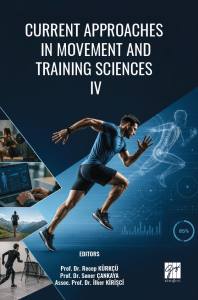
CURRENT APPROACHES IN MOVEMENT AND TRAININGSCIENCES- IV
Sport is regarded as an important tool that enables individuals to maintain their health, develop their social skills, and also contribute to their socioeconomic and cultural development (Sunay, 2003). Football, one of the leading sports disciplines, is also defined as a sport that has become a global phenomenon worldwide (Christenson et al., 2018). With the increasing recognition of football around the world, the general physical characteristics and cognitive performance requirements necessary for success in this field have also become increasingly important (Murr et al., 2018; Verburgh et al., 2016). In order to achieve a successful performance, it is anticipated that physical fitness and performance levels in football should be raised to the highest possible levels (Smith et al., 2016; Aras et al., 2020). In this regard, training processes of athletes are systematically planned and organized according to their individual needs based on the findings obtained from the performance tests in which they participate. In this process, the role of warm-up and stretching exercises is considered to be of great importance. An effective warm-up performed before competitions and training sessions helps to improve the athlete’s performance, provides both physical and mental preparation, and also contributes to the support of physiological adaptation processes (Swanson, 2006).
-
Kategori
Sosyal ve Beşeri Bilimler
-
Konu
Spor
- Yazarlar
-
Editör
Recep KÜRKÇÜ,Soner ÇANKAYA,İlker KİRİŞCİ
- Yayınevi
İçeriğe ait içindekiler bölümünün aktarımı devam etmektedir.
Bu kitap aşağıdaki Dijital Hak Yönetimi (DRM) Koşullarıyla belirlenen süre için kullanılabilmektedir:
-
Yazıcıdan Çıktı Alma İzni:
Yok
-
Kes/Kopyala/Yapıştır:
Yok
-
Toplam Kullanılabilecek Cihaz Adedi:
2
-
Kitap Dosyasını Farklı Kaydetme ve Dijital Ortamda Çoğaltma İzni:
Yok
Benzer Kitaplar
 Egzersiz Enerji Metabolizma ve Isı Uyumu
Mehmet Günay
 Yüzme El Kitabı
Selbi Pehlivan
 Performansta Optimal Duygu Durumu: İzof Modeli
Dr. Metin Yüceant
 Vücut Geliştirme ve Fitness Sporu İle İlgilenen Bireylerde Saldırganlık
Abdullah Bingölbalı
 Sporda Güncel Yaklaşımlar
 Futbol Milli Takım Seçmelerinde Bağıl Yaş Etkisi ve Fiziksel Performans
Levent Şahin
 Beden Eğitimi ve Spora Multidisipliner Bir Bakış 4
 Pandemi Kısıtlamaları Sürecinde Polis Memurlarının Diyet
Prof. Dr. Serdar ORHAN
 Sporda E-Öğrenme, Akademik Erteleme ve Duygusal Zeka
Dr. Öğr. Üyesi Tuğba Mutlu Bozkurt
 Beden Eğitimi ve Spor Yüksek Okullarında Küreselleşmenin Beklenen ve Gözlenen Etkileri
İbrahim Ümran Akdağcık
 Spor Bilimlerinde Nitel Araştırmalar I
Mesut Süleymanoğulları
 Spor Merkezlerindeki Bireylerin Spordan ve Spor Merkezlerinden Beklentileri
Mustafa Aksoy